
Dr. Harapnuik (2020) suggests that those learners that have a growth mindset will take feedback and criticism as a challenge. This challenge presents a chance to grow and progress in mastery of a concept. These challenges are opportunities to get closer to understanding. We should also embrace the “power of yet” (Dweck 2007). With feedforward, we place the value on that challenge, and not success. The focus should also be placed on finding a sense of purpose (Harapnuik 2020).
In my experiences in the Applied Digital Learning master’s program, I have had many opportunities to give and receive feedforward. This is a foundational part of the entire program. Collaboration is strongly encouraged in every aspect of each course. Was all the criticism I gave or received feedforward? I am still working on my true understanding of feedforward. My skepticism comes from my own battle with my growth mindset.
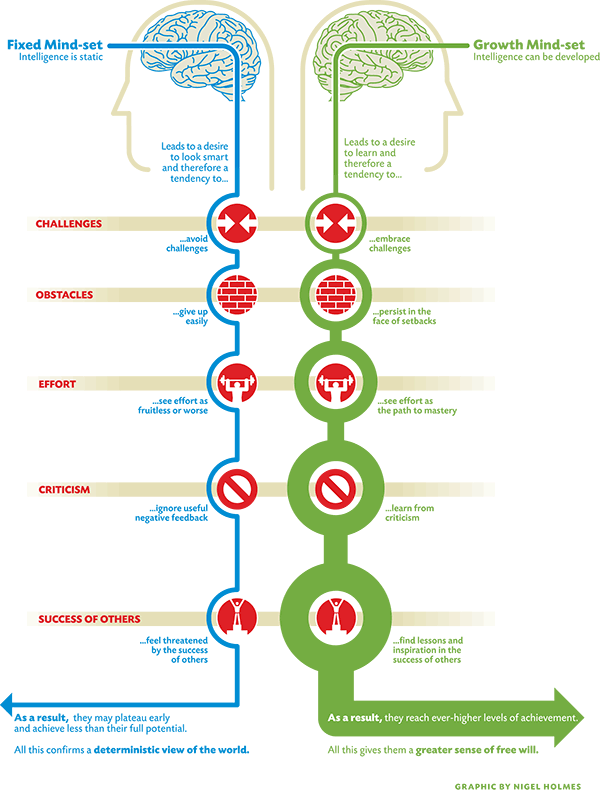
While I did not ignore the suggestions of my peers, I was fearful of appearing to not understand the topic. In other words, I did not want to look dumb. This is just my own lack of confidence. I am aware that I am not dumb. This is an issue that I need to work on. It has always been hard for me to put myself out there. By sharing my work, I am vulnerable. This is a challenge that I will continue to tackle. I hope I can gain self-confidence. This vulnerability is good. I am developing skills I have always lacked, namely those that would make me a better leader.
References
Dweck, C. S. (2007). Mindset: The new psychology of success (Updated Edition). Ballantine Books.
Harapnuik, D. (2020, April 30). Feedback vs. feedforward. https://www.Harapnuik.Org/. https://www.harapnuik.org/?p=8273
 Valary's Vision of a Modern Secondary Mathematics Classroom