

Through my assigned readings, video clips, group discussions, and my assignments in this course, I have found that my original notions on the learning environment I am obligated to provide in my classroom were narrow and ill-informed. My ignorance was not intentional. I have always been open and seeking out any way I could be better for the benefit of my learners. It starts with the big picture, the learning itself. In A New Culture of Learning, Thomas and Brown (2011) argued the antiquated approach in education is not working. We, the educators, have to change this. In my response to Brown and Thomas, I was enlightened to the possibilities of new ways to learn through play and imagination. Gaming has a reputation of negatively impacting education. This is due mainly to the time in which our youth spend online and the safety and security risks it poses. I was given a new perspective in regards to the benefits of the collaborative approach many take to winning the games they play. This leads to the development of critical thinking and problem solving skills. It is these skills I need to get my learners to utilize in their academic learning. It is an amazing opportunity to connect the love of gaming many of my learners have to a love of learning (or at least a better appreciation).


Armed with a new approach to learning, my next challenge was communicating my Learning Philosophy. I found myself reflecting on my own journey as a learner. It has been through those experiences that I have grown and progressed in my own learning. I realize the importance of an educator’s role in creating a significant learning environment that will guide my learners to find their voice and take ownership of their learning. This is not an easy task in a high school math class full of freshmen. I must lead my learners to appreciate the opportunities that productive failure allows them. By embracing the mistakes as chances to learn, I truly hope they find the joy of the success that results.
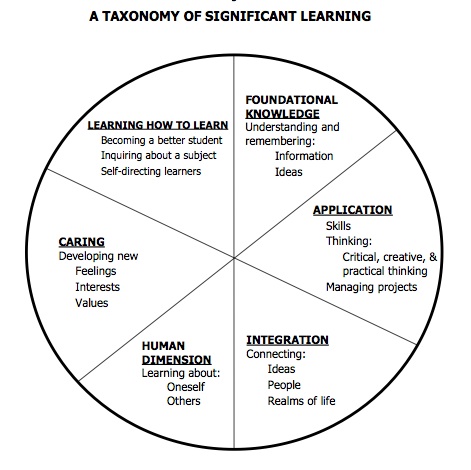
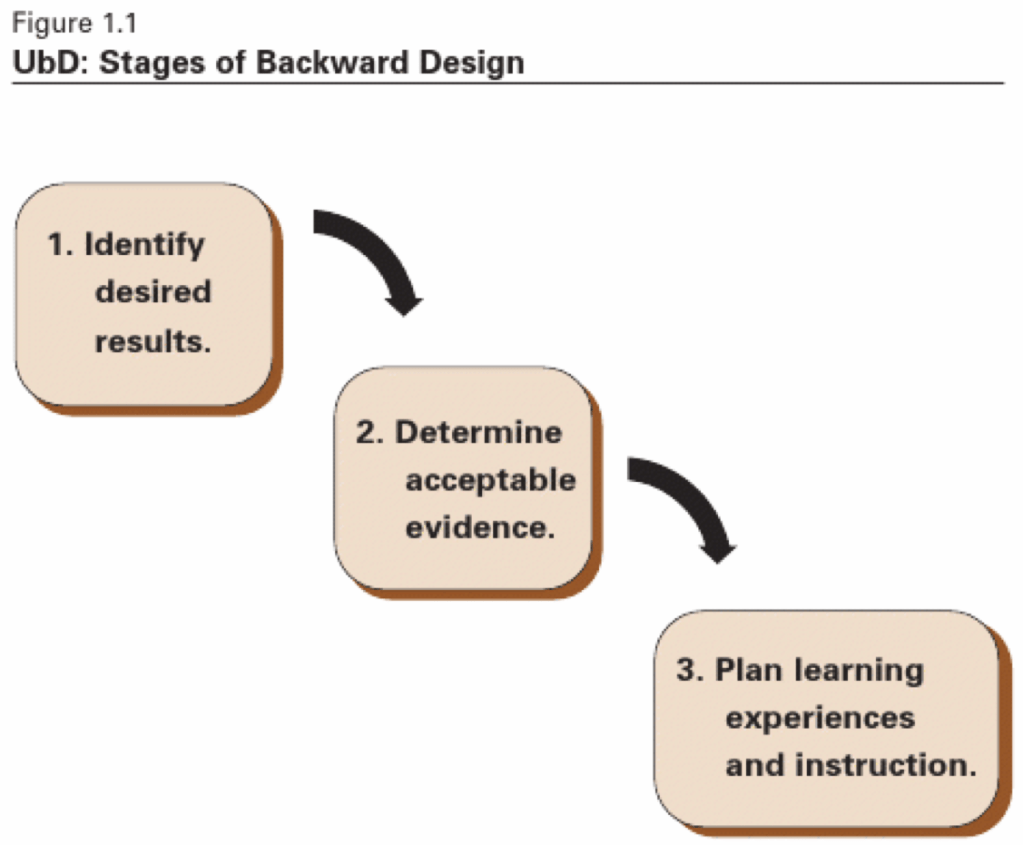
With that end goal in mind, we were challenged to design and plan a unit or course of study that directly ties to our Innovation Plan. The first step was utilizing A Self-Directed Guide to Designing Courses for Significant Learning to come up with a 3-Column Table aligning the Learning Outcomes, Assessments and Activities (Fink, 2003). The 3-Column Table serves as a wide view of learning that is most appropriate for a course or unit of study. Through the reflection of the learners and the situational factors, I was able to narrow my focus to the details of my unit of study. With the guidance of Understanding by Design (UbD) by Wiggins and McTighe, I looked first at where I wanted my learners to end their journey after completing the learning. Considering my desired results, I used the enduring understandings and essential questions to plan learning activities that would hopefully result in my learners realizing their destination of mastery of the content. The UbD 1-Page Template provides a format that is easy for others to see where a unit should end. It is a great tool for planning within a PLC.
As I conclude the trek down the path of this course, I find it important to regard Learners’ Mindset. The first part of the last assignment was to reflect on our progression with our understanding of the Growth Mindset. It began with our Growth Mindset Plan in Concepts of Educational Technology. The development of a Growth Mindset plays an integral part in the creation of an environment that maximizes opportunities for learning. As I have mentioned previously, it comes back to failure and the role it plays in my classroom. Anxiety about math is not going to go away and I must find a way to embrace the obstacle it presents to me. I love a challenge, as it only adds to my purpose as a mentor to my students. A significant part of my role as a teacher is to be an example that mistakes and failure can lead to eventually finding success in all aspects of their education and learning. It is also important to myself that I do my best to help them find that learning does not have a beginning or ending. It is a dynamic experience that will continue the rest of their lives. I am but a small stop along their expedition of learning. My wish would be that I am at least a memorable stop in the odyssey of knowledge.

References
A New Culture of Learning Book Cover Image. (2011). amazon.com. https://www.amazon.com/New-Culture-Learning-Cultivating-Imagination/dp/1456458884
Fink, L. D., Ph.D. (2003). A self-directed guide to designing courses for significant learning. Retrieved from https://luonline.blackboard.com/ultra/courses/_194621_1/outline/edit/document/_7704794_1?courseId=_194621_1&view=content
Thomas, D., & Brown, J. S. (2011). A New Culture of Learning: Cultivating the Imagination for a World of Constant Change. Van Haren Publishing.
Wiggins, G. P., & McTighe, J. (2006). Understanding by Design. Pearson Education, Incorporated.
 Valary's Vision of a Modern Secondary Mathematics Classroom