
Thank you for leaving your feedback and suggestions as comments to this blog post. Your assistance will help me be the best teacher for my future learners!
Author: vpatterson2
-
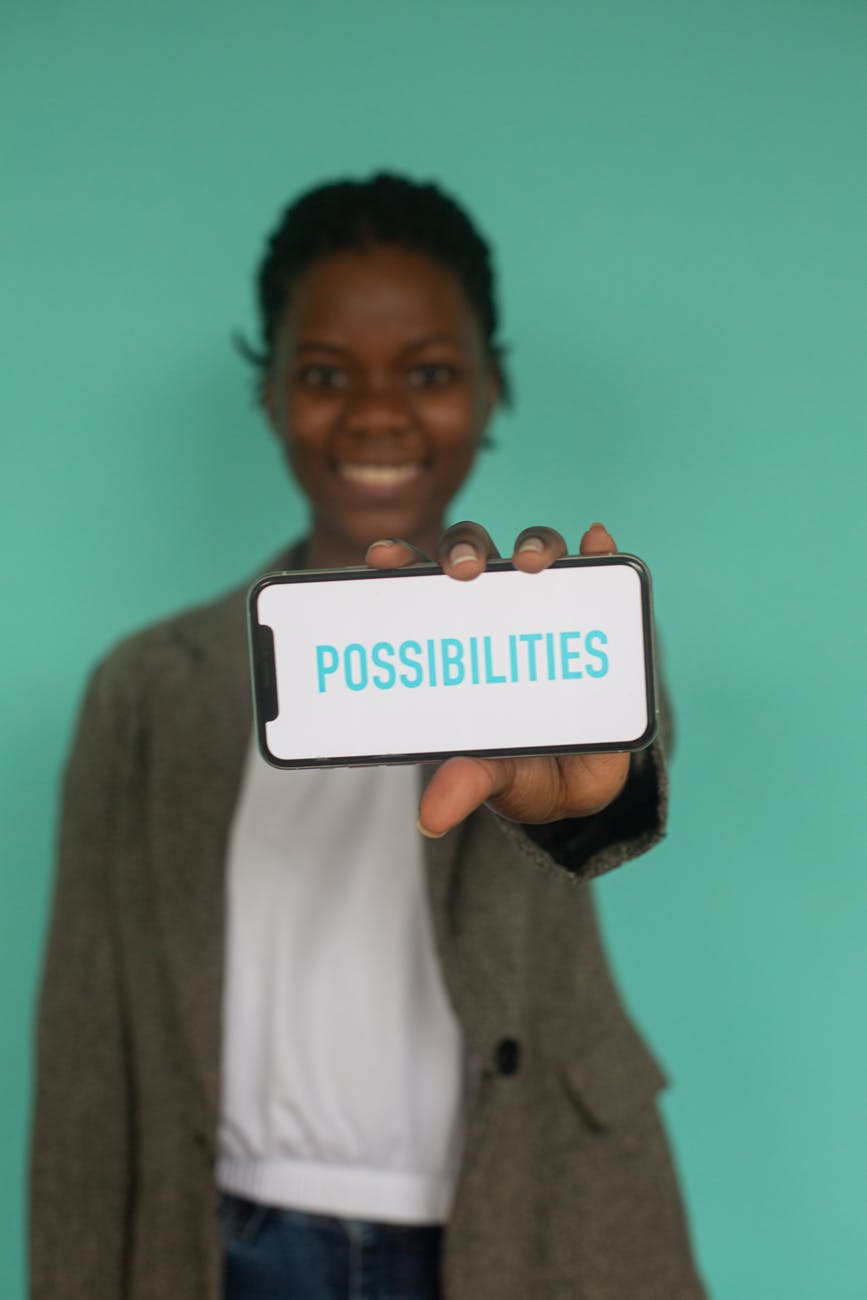
Photo by Monstera on Pexels.com Growth mindset has been a topic that I have learned about in many Professional Development opportunities in my short time in education. As I read Mindset (Dweck, 2016), I was reminded how a lot of times I can embrace the fixed mindset. I have given up on many attempts at hobbies, like sewing and playing the piano. I felt I was not good enough and did have the time to devote to learning about making a quilt or playing Canon in D by Pachelbel. Ironic for someone who preaches about Growth Mindset on an almost daily basis to her students. I did answer the questions posed by Dr. Dweck as one with a growth mindset. Now, why would I give up so easily when I believe that I am not incapable of learning new things?
I thought back to my childhood and the many extracurricular activities I tried and gave up. There was gymnastics, t-ball, dance, the piano, basketball and the drill team. The last two were school-sponsored opportunities. I cannot pinpoint a particular reason as to why none of these ever became something I did beyond trying out or attempting for a few months. I was not told I was not good at it, but also I do not remember anyone else encouraging me to keep it up. My parents never forced me to do any of these types of activities. I believe if I chose to stick it out, they would have supported me. I do remember the feeling I was not good enough or talented enough to keep it up. Other kids were better than me and it came more naturally to them. The praise I heard from my parents, family members, teachers, and adults in mentoring roles in my life was not about effort or perseverance, It was about how well they perceived I could be. Was this something I hold against them for not helping me overcome my insecurities? Absolutely not! They were telling me what they believed was encouraging and supportive. I am sure as a parent I have not done well for my own children in developing a growth mindset.
“In the fixed mindset, everything is about the outcome. If you fail—or if you’re not the best—it’s all been wasted. The growth mindset allows people to value what they’re doing regardless of the outcome . They’re tackling problems, charting new courses, working on important issues. Maybe they haven’t found the cure for cancer, but the search was deeply meaningful.”
― Carol S. Dweck, Mindset: The New Psychology of SuccessI try to be a cheerleader in my classroom as well as at home. I want all my students to know that I believe in them and their abilities. My learners are all unique and learn differently. I love the power of “yet.” It reminds us that we don’t have a set schedule on how we have to learn. My goal is always to find the best way for each of my learners to be supported and encouraged. I want to help them find their motivation and see the joy of mastering a new topic. Those lightbulb moments my students have during class or tutoring are priceless and bring me a lot of gratitude when I get to experience them. I strive to communicate my beliefs about how learning is not something that is instant in most cases. It takes practice and application. Most will experience failures and those need to be chances for us all to learn from. Mistakes are opportunities for growth and second chances. I find many of my learners compare themselves to their peers. We all have done this at one time or another. One student grasps a concept after one example and is able to speed through the practice. Another learner struggles, even after multiple examples and reteach opportunities. They are left feeling defeated and that it is too hard. Why should they bother trying to figure it out? I have to use this very situation to help this learner deal with the failure and see it as a benefit for their learning.
Failure is too often tied to a numerical grade or percentage. This is where a chance to change my students’ mindsets comes in. One focus this coming school year will be to cut the ties of failure to a particular grade. My philosophy on giving multiple attempts for assignments and assessments is shifting as I read about effort, determination, and mindset. As educators, we often use a grade to penalize or punish a behavior (i.e. 20 point penalty for turning in late). What effect does this have on the learner’s motivation to attempt that assessment or assignment again? I see time and time again my students will take an additional attempt for granted and rush through it. They are just wanting to “pass”. Their response is “just give me the 70, miss.” I am not happy with mediocre work and I want them to not be happy with it either. How do I help them see the benefit of going back to relearn a concept that they are struggling with to be able to successfully retake a quiz or test? I think my first step is to not punish them by giving them only partial credit. I will assess their mastery the same on all attempts. I hope to shift the thinking of failure as a bad thing to look at the mistake as not knowing or getting a concept just “yet.”
References
Alumni, S. (2014, October 9). Developing a Growth Mindset with Carol Dweck [Video]. YouTube. https://www.youtube.com/watch?v=hiiEeMN7vbQ&feature=youtu.be
Dweck, C. S. (2007). Mindset: The New Psychology of Success (Updated Edition). Ballantine Books.
TEDx Talks. (2012, November 18). The Power of belief — mindset and success | Eduardo Briceno | TEDxManhattanBeach [Video]. YouTube. https://www.youtube.com/watch?v=pN34FNbOKXc&feature=youtu.be
-
“no matter what your ability is, effort is what ignites that ability and turns it into accomplishment.”
Carol S. Dweck, Mindset: The New Psychology Of SuccessOne would think that it is easy for an educator to adopt a growth mindset. But as I read through Carol Dweck’s article titled Carol Dweck revisits the ‘growth mindset,’ I reflected on my mindset. While I claim to have a growth mindset, I also have some traits of the “false growth mindset” described in the article. I was led to believe in the professional developments I have attended in the past that it was the ideal thing for our learners to be successful. I have tried (and failed) to encourage my students to realize their ability to conquer math. I would talk “the talk”, but have not really walked “the walk.” Self-doubt and lack of confidence in teenagers are difficult things to overcome. I would find myself walking away from a student that would refuse my support or help. I need to practice what I preach and not let them give up so easily. I know that they are all capable of being successful in my math class. It is not realistic to expect our students and even ourselves to have a growth mindset every minute of every day. We need to learn strategies to address those moments when that fixed mindset creeps back.
One of the most important goals that I hope to accomplish with the help of technology is to provide my learners with timely and appropriate feedback. With the help of the digital medium, I will be able to monitor their progress in real-time as they work through online practice and assessments. It can help me make decisions regarding necessary interventions or even enrichment opportunities. This will also give me a chance to help my learners find their growth mindset. The online practice also makes it easier and more convenient for multiple attempts to complete and demonstrate mastery of concepts presented in my class. How do I help them see the benefit of their attempts after a previous failure? This is a question I am going to have to think about A LOT. My experiences with allowing retakes on assessments and redoing assignments have not been ideal. The students just are in it to “pass.”
I want to find a way to convince them that failing is not a bad thing. It is something we cannot shelter them from. This is why having a growth mindset is so important for their success. I need to show them how their efforts and the different strategies will lead them to understand and achieve anything they put their mind to. Hard work is just part of it. Failure and perseverance are just as important.
Reference
Dweck, C. S. (2007). Mindset: The new psychology of success (Updated Edition). Ballantine Books.
-
Words have a lasting impact. We often hear the phrase, “Actions speak louder than words.” Body language and tone of voice are just as impactful as words.
By creating a visual representation of my innovation proposal, I hope to convey the importance of changing our learning approach in our Algebra 1 classrooms. The goal is for my audience, my administrators, my department chair, and the school community, to realize my sincere intentions of providing the most beneficial classroom environment for our learners. The opportunity that a flipped classroom will afford the students to find their voice and ownership.
The point of view that I must take with my media plea is one of our community. Here are some questions I need to answer:
- Will the benefits go beyond our Algebra I classrooms?
- How can this model’s employment inspire educators in other subject and content areas?
- How will I support those joining in my vision?
- Where do my colleagues stand in their comfort level of technology in the classroom?
- What does the teacher’s role look like? What does the student’s role look like?
- How do we ensure the success of a blended learning model?
- Do we need to utilize other models and create a hybrid model of our own?
- What support do I need to implement and ensure the success of my innovation project?
I think my words and research will help me do this, but I have to convince my audience that I truly BELIEVE it is a necessary change for ultimately the whole of our school community. This is the most important piece of my proposal, my belief. With that mindset, I do not see how we can fail!

Photo by Andrea Piacquadio on Pexels.com References
Crucial Learning. (2015, January 5). How to change people who don’t want to change | The Behavioral Science Guys [Video]. YouTube. https://www.youtube.com/watch?v=9ACi-D5DI6A&feature=youtu.be
Words, P. O. (2010, February 23). The power of words [Video]. YouTube. https://www.youtube.com/watch?v=Hzgzim5m7oU&feature=youtu.be
-
An “innovator and critical thinker” is what Ms. Markoff suggested a teacher has to be to help ensure the success of a blended learning model. I couldn’t agree more. Technology is not something we can just sit on a student’s desk and say “go and learn!” The laptop or iPad is merely an extension of the teacher. Teachers are more important to their learners in a blended environment than in the traditional classroom. We have the task of finding the most valuable digital tools to assist in their learning.
Flexibility is another component to consider when implementing blended learning opportunities. That was one of the first big lessons I learned in my undergraduate program. As an educator, we had to be ready to pivot in a matter of minutes if a lesson or activity was not working for our learners. But are teachers really flexible? I know that lesson planning takes a big chunk out of my day during the school year. During my PLC time with my team, we spent so many hours discussing and strategizing for concerns about how our students could misunderstand or get confused. Was this planning necessary? Mr. Ito hinted that might be the case when he talked about the “Pull over Push.” He spoke about how not everything needs to be planned. This is where flexibility comes into play. While I plan with my team, my classroom will look different from theirs. I have learned to always do what is best for me and my students over the needs of my team. This is how I am a “Now-ist.” This goes hand and hand with being committed and flexible.
Does this mean I totally ignore feedback from my team or anyone outside of my classroom? No! If I do what my team thinks I should do, I would not be creating the necessary classroom experience for my students. My expertise and relationships with my learners help me make those decisions for their access to choice and voice in the classroom. I can learn from their experiences and advice. I cannot grow as an educator on my own. I need to ask for help when necessary and get up and try again after I fail miserably! This is the mindset I want my students to have too! I know that, for as much as I promote the growth mindset, my words are meaningless without my actions matching them.

Photo by ThisIsEngineering on Pexels.com 21st-century skills are imperative for a learner’s success. It is my obligation to provide authentic experiences in my classroom to help them mold and refine those skills. We also have to make them benefit personally for our students. If a student does not see or understand the value of learning, can they truly be successful? It is at this point that our job becomes a lot more difficult to re-engage that student. We have to be intentional about our learning experiences. Innovative practices that technology affords are how we accomplish that.
References
Perry, J. (2015, May 15). Joi Ito Want to innovate? Become a “now ist” [Video]. YouTube. https://www.youtube.com/watch?v=vRAMQJJu7uY&feature=youtu.be
TEDx Talks. (2014, May 6). Click here — blended learning and the future of education: Monique Markoff at TEDxIthacaCollege [Video]. YouTube. https://www.youtube.com/watch?v=Mb2d8E1dZjY&feature=youtu.be
-

Photo by David Gylland It is mind-boggling how many similarities the language has in the video to how we talk about education today. We want our students to accomplish while they are learning. Hands-on projects are still one of the greatest trends amongst teachers. Connecting an experience to a concept will help learners retain that knowledge. Connecting lessons throughout the core subjects (and even electives like World Language courses and Business Management) is also still a strategic approach we like to use. But what is also strange is how much we have NOT changed since the 1940s. We still stand at the front of a classroom and lecture while students take notes. We still have the parents complaining about what their children are or are not learning. They had a front seat to their education over the last 2 years, thanks to virtual learning. This led to new voices speaking up about all the things they disagreed with that were happening in their child’s classroom. While I believe parents/guardians need to be involved in the education of their children, there needs to be trusted on their part towards teachers, admin, and other personnel in the district to decide what content is presented and how it will be taught. We are the ones who have been trained in making these decisions and it is always done with the best interests of our learners in mind. That begs the question: how do teachers instigate change that will affect the classrooms outside of their own schoolhouse? Is it even possible? This is one of the many questions I am pondering as I develop my Innovation project. How can I bring about significant change for the good of my community? I think it is possible, if not inevitable.
From the blog, People who like this stuff…like this stuff, change has been avoided because a few stakeholders feel that the status quo is working just fine. That is not what I see from my point of view. My students and coworkers are struggling. My experiences and observations from inside my school have been echoed by many. These last 2 years have exposed a system that is failing at a potentially catastrophic level. So many educators are leaving and not enough going to school to become an educator. How do we get the people making the decisions to see the fight we face on a daily basis without it being at the expense of our learners and educators? We have to bridge that abyss-sized divide between the stakeholders and our classrooms. I will continue to better myself and my practices for my learners. Hopefully, my experiences will allow me to share them with my colleagues and inspire others to find their full potential. I feel those in the “trenches” need to find our voice and tell those making decisions that we need change. Our students will continue to suffer if we do not throw our caution to the wind and try something innovative and, yes, scary. As I like to remind my students, anything worth it in life will take effort and hard work. I, for one, am ready to roll up my sleeves and get to work engaging my learners. They need to have a voice too!
-
“When something is important enough, you do it even if the odds are not in your favor.”
Elon MuskIn the 12 years that I have been in the classroom, I have seen a lot of change. It is something educators do on a daily basis. We make thousands of decisions as we go through a lesson or activity with our learners. We also seem to try in many ways to reinvent the wheel after each school year. Reflection is also something that educators are always doing. This comes with new strategies for formative assessment, the latest SEL practices, and finding the newest educational software innovations. These are all important to look at and reevaluate. But sometimes those changes don’t even get a chance to make an impact because we are again moving on to the “latest and greatest” trend in the education world.
I have seen the rollout of a lot of technology. My first experience was in 2017 when my district provided a class set of Chromebooks to every teacher. I can remember thinking about how I was going to figure out how to use this on a weekly (even better yet, daily) basis? I was offered hours of PD and gave up a lot of planning and personal time figuring out the best use of this awesome tool. As good as my intentions were, I struggled and often I found myself using it to get a break from the “sit and get” that really wears me out. Disruptive change was not what was happening in this situation.
Fast-forward to January of this year. I am now in another district at another high school. This time, I am awarded a class set of Chromebooks that have been purchased with ESSR funds. I embraced the technology and dove in. With my experiences of distance learning and getting more Google savvy, I found a passion for creating learning menus and hyperdocs for my Geometry classes. The feedback from my classes was positive. However, I found myself with 2 fairly significant problems. I work with 2 teams of teachers due to having 2 preps. One of those teams did not have the technology in their classrooms. I was often utilizing the technology when they could not. I am hoping this will not be an issue next year with the rumors of more technology coming! The second issue was (and is) the most difficult and daunting. Student apathy and truancy has spread like a plague among our learners. I spent a lot of time reflecting about what I could do to “fix it.” This is when I realized that it was me that had to make the first big change. I cannot change anyone but myself. I applied to graduate school.
As I read Blended (Horn & Staker, 2015), I feel inspired and a bit overwhelmed. I am eager to bring about disruptive change on my campus (and hopefully in my district). The last 2 years have been so challenging for teachers with having to use technology as the only means of lesson and assessment delivery. We need to go back to the drawing board and look at best practices. Technology is not the quick fix that many thought it would be. It is not that easy. With all the technology we all have at our disposal at any time, we have to encourage learners to see the benefit of technology at the very beginning. It does not have to be the only way to learn. I am left with wondering how best to narrow my project’s focus and how I am going to accomplish my goal. I can’t do it all, as much as I want to try.
 Valary's Vision of a Modern Secondary Mathematics Classroom