
Is a Growth Mindset enough?

Through the research and development of my Innovation Plan to implement a blended learning model of a Flipped Classroom, one of the obstacles I looked to overcome was the fixed mindset of my learners. Through my course work in EDLD 5302 Concepts of Educational Technology, I created a Growth Mindset Plan to support and guide my learners. This plan was a response to the yearly battle with my learners’ lack of confidence in their ability to learn math.
My first item on the agenda at the start of the new school year is to get to know my learners. It is important to establish those relationships early in the year. It is through those relationship that I foster trust and respect. Most teenagers do not like to ask for help when they are struggling in the learning process. It is with the building of trust and fostering a classroom learning environment that is safe for all I can ease the anxieties with regards to their struggles and avoidance of seeking out support.
One of the most powerful moments of learning is our last mistake. I love that I can show my learners that failure is something to be celebrated. I am sad when my learners so easily say that they cannot do the math we are learning in my Algebra I class. By praising the processes that my learners utilize to solve problems and make connections, I can reshape their mindsets (R, 2015). I have never been the type of educator that requires one approach to problem-solving. I look to my learners to share if they have another way of approaching a problem. I love to learn new algorithms. By validating and supporting different ways to find the answers, I am confident I am growing lifelong learners.
Grit is a word that is used without considering it’s entire meaning. It is often used in partnership with the term, rigor. Grit is about perseverance and passion in the pursuit of long-term goals (TED, 2013). In her TED Talk, Duckworth’s research leads to a connection of a growth mindset and grit. Duckworth also states that either no connection or a inverse connection exists between talent and grit. So how do I motivate an apathetic student? By growing their mindset! A learner who operates with a growth mindset is not afraid of failure and of trying again if they do struggle.
Recent studies have shown little to no correlation to interventions to mindsets having an effect on student achievement (Sisk et al., 2018). In a recent article in Aeon, Hendrick argues that we should first consider student achievement that can lead to a greater sense of positive self-perception (2019). It is through this progression that a learner can find their growth mindset. This approach seems unintuitive, as it appears that we put the horse before the cart. How do I help my learners find greater achievement in order to discover the efficacious effects of their perseverance and efforts? I think the major component of this challenge is by giving my learners choice, ownership and voice through authentic learning experiences (Harapnuik, 2019).
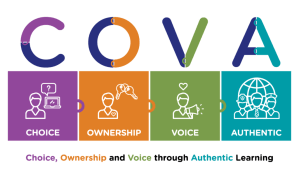
Growth mindset is only a part of learners’ success. We have to consider the environment of learning as well. We have to provide a learning atmosphere that meets all learners at their present levels of understanding. I often encourage my learners with the fact that they may not fully be aware of it, but that are learning every day. This knowledge that is more difficult for one to express verbally is referred to as ‘tacit knowledge’, as defined by Polanyi in his book, Personal Knowledge (1958). I believe it is part of obligation, as a learning facilitator, to find novel ways for my learners to demonstrate their learning. Through my unit design and planning, I have researched many new strategies to use as evaluative tools in leu of the typical assessments like a paper test or quiz. I see these resources as means of enlightening my learners to their full potential as mathematicians.
One aspect of education that I particularly dislike is grades. The value placed on a numerical score is deceiving. I see my learners for more than an assessment score. Often I use informal conversations and observations to assess where they are at with the content. Questioning is a skill I have continually working on perfecting as a resource for formative assessment. Personally, I have taken on the challenge of implementing for opportunities for my learners to demonstrate understanding in a written form or orally. I am met with reluctance when asking students to write about math. I meet them where there at and ask them some guiding questions and then encourage them to write down those responses they given to me. For some, the conversations lead to realizations of what they have learned and mastered. It is always a great feeling when a student can articulate, orally or in written form, the mathematical processes.
When I have conversations with my learners about their progress or lack there of, I see it as a chance to discuss the true meaning of those scores. It is also the perfect time for us to talk about the power of the word, “yet.” Dweck describes a scenario about a school in Chicago giving students that fail a course the grade of “not yet” (TED, 2014). She explains just how impactful the two small words can have in driving a path into the future. We have to focusing on praising processes and effort, not intelligence and being smart. By doing these, we will give our learners greater persistence and perseverance. They will discover that they do possess the ability to learn whatever they may put their hard work into. In her book, Mindset: The new psychology of success, Dweck gave the story of a young gymnast that did not find success in her first meet (2016, pp. 183-184). While the father could have protected his daughter from failure by praising her talent, he made the decision to tell her the truth, that she was not ready to win a ribbon. He reenforced her commitment and told her if she worked hard that she would find herself on the podium. Failures solidify that we are not yet where we could be if we just keep putting forth that hard work and struggle through to reach that goal of mastery.
The use of grades being a metric for the understanding and learning of a person has become diluted and unreliable due to the acceptance of cheating. My learners have no qualms about using their phone to get the answers, and in some cases, the work for the problems they are assigned to complete. I never discourage collaboration on practice in my math classes. These are the opportunities that learners can find and create stronger connections in their learning. I, too, find that during these times of working together, I learn from my students. I am not naïve to the fact that these resources to find answers are not going away. I feel I have a responsibility to letting my learners know the best way to utilize these digital tools. I appreciate that they can use them for feedback on their own work when I am not available to provide that. In a hope to avoid the use of Photomath and Mathway, I assign digital practice through websites like Delta Math, Edia and Quizizz so my learner are given multiple attempts problems, immediate feedback and intervention opportunities like a worked example or short video explanation.
I have discovered that with the ability to receive immediate feedback and multiple attempts, my learners will find the intrinsic motivation to learn the content. The feedback from several of my learners when we do the occasional paper-pencil assignment is that they would rather do it online. They do not like the delay, as short as I try make it, in receiving the feedback. I hope that these small choices I make in my classroom has the great impact that I know can happen with their mindsets and ultimately, with their future successes as a learner. I am always looking for best practices to implement in my classroom. With all the change that must happen in education that I have no control, I must retain control of the significant learning environments I must foster for my learners. I am hopeful that if I can do my part, that can lead to bigger and better things within my school community.
21st century skills ability art autonomy blended learning change choice board collaboration connections COVA creativity discussion edtech education ePortfolio facebook failure feedback feedforward flipped classroom Google growth mindset innovative iste learning learning menu mistakes nctm networking philosophy PLC pln possibilities proactive professional progressive reflection secondary mathematics Slides success technology urgency workforce writing yet
 Valary's Vision of a Modern Secondary Mathematics Classroom